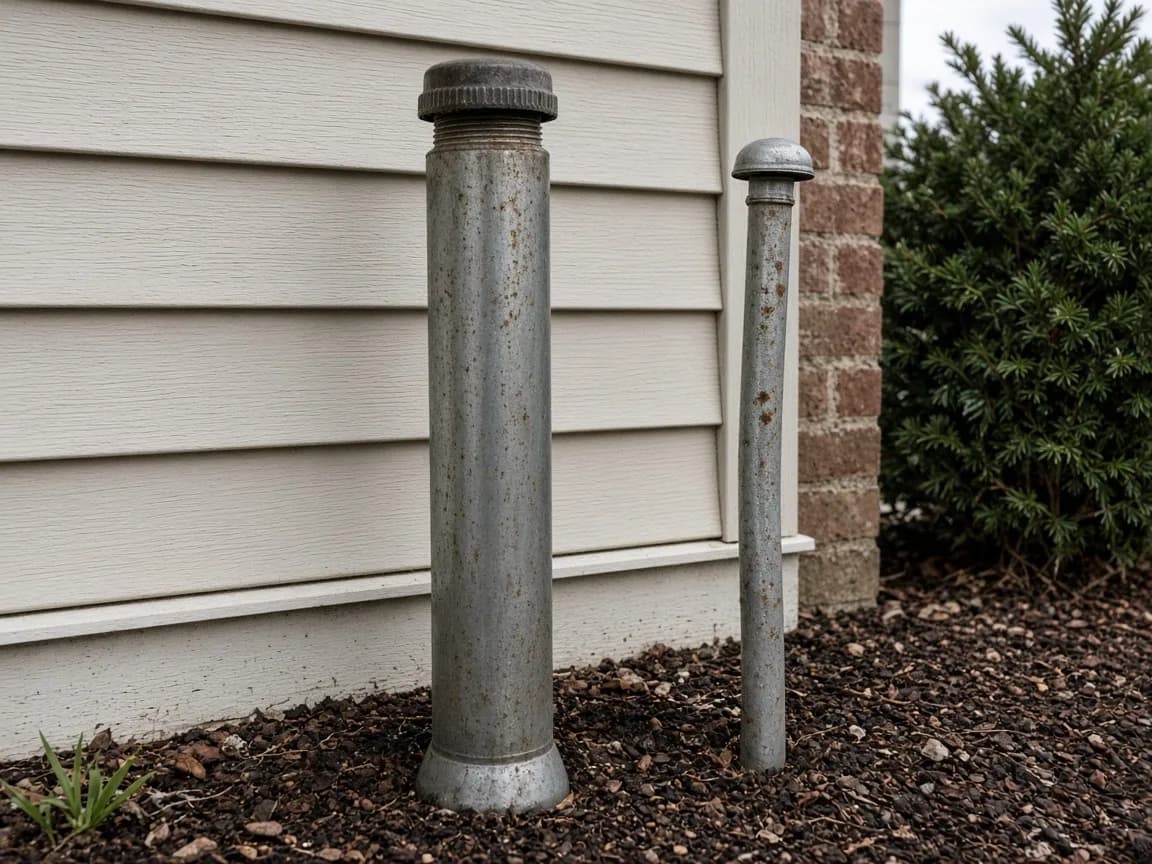
An underground heating-oil tank is a buried steel cylinder. Homeowners often notice a fill pipe and a thinner vent near the foundation long after the burner is gone. A sale or a home inspection is often what turns those leftover pipes into a decision.
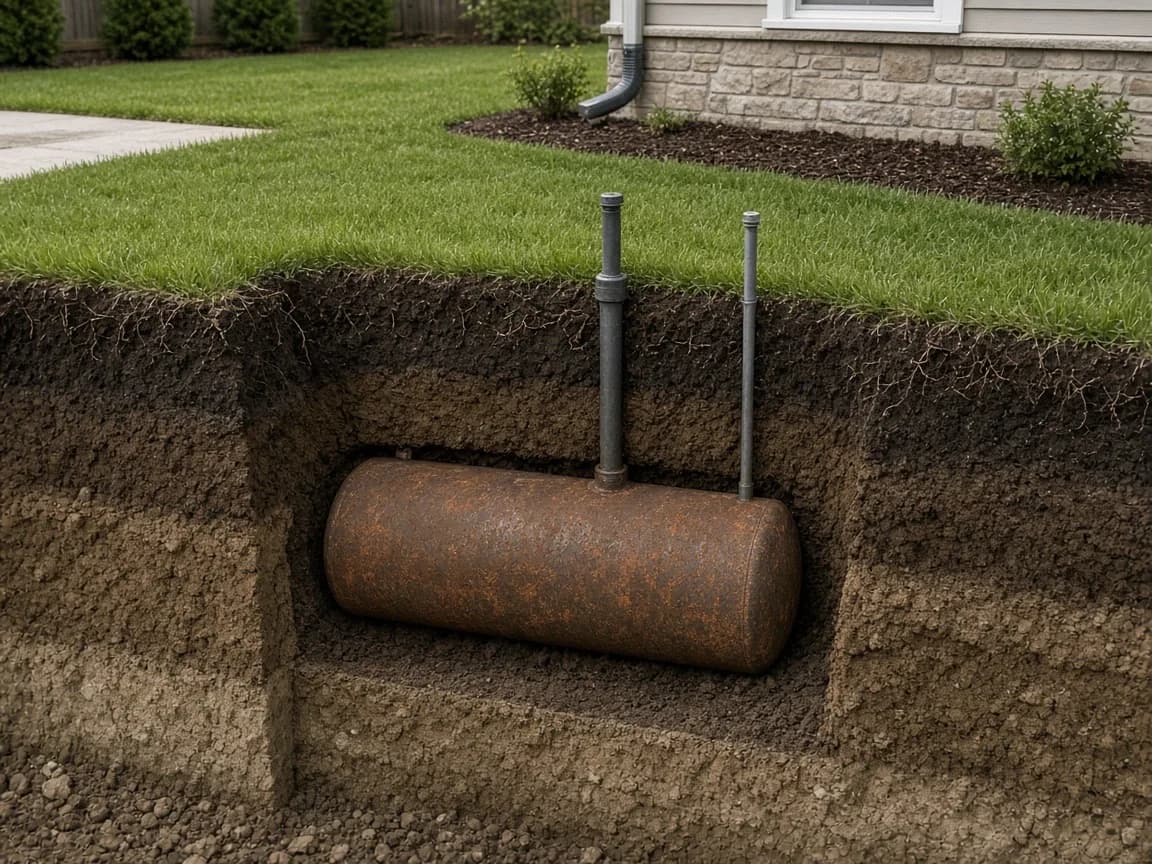
Clues are not a locate method
A capped pipe near the foundation, a thinner vent, a patch of different soil or paving, an old delivery ticket, or a line on a prior inspection can suggest a buried tank. None of that proves a tank is still there, where it sits, or what condition it is in. A pipe can belong to something else. A soil patch can be landscaping. A ticket can be decades old. Missing paperwork does not prove the tank is gone either.
Questions a homeowner can check without digging:
- Is there a fill or vent that does not connect to a tank you can see in the basement?
- Does a prior inspection, survey, or oil-delivery record mention an underground tank, or only an indoor one?
- Did a previous owner say the tank was removed or filled, and is there a letter from the township or borough?
- Is the only tank you can find indoors? That is a basement tank, not this page.
Those questions narrow the conversation. They do not find the tank. Locating a buried vessel, if one is there, is a professional step separate from removing it. Digging, testing, or filling a tank is contractor work.
What old records can and cannot show
Delivery tickets, a prior survey, and township or borough files can show whether someone already applied to remove or close a tank. Use permits and records to match the office on the deed. A neighborhood name is not a building department.
A closed municipal permit can show that an office was involved and that the work it inspected was finished under that permit. It does not, by itself, prove the soil is clean. Buckingham Township is one local example: its published requirements describe an inspector on site when a tank is removed from the ground. That requirement is Buckingham’s. It is not a statewide soil letter, and it does not apply to a basement tank.
What changes the next step
- Does a driveway, deck, addition, or tight side yard sit over the suspected tank?
- Are there permits, closure letters, or delivery records, or is the paperwork missing?
- Is there heating-oil odor, staining, or a damp patch near the fill, vent, or basement wall?
- Has someone proposed leaving the tank in the ground?
Odor or staining is not a routine pull. Those signs do not, by themselves, prove contamination. Use the leaking-tank page first.
After the tank is out
DEP’s residential heating-oil tips say to remove the fill pipe when a tank is removed. If the fill line cannot come out, DEP says to seal both ends permanently and tell the oil company that the tank is gone and that no further delivery should be made. DEP has documented oil delivered through fill pipes for tanks that no longer exist.
A homeowner may ask for records the job actually produced, such as an itemized invoice, photographs, a disposal receipt, or municipal closeout documentation if issued. Those are practical papers to request. They are not a statewide mandatory set, and they do not, by themselves, establish that the soil is clean.
Removal is not cleanup reimbursement
Taking a buried tank out of the ground is one job. Evaluating a suspected release is another. Pennsylvania’s Underground Heating Oil Tank Cleanup Reimbursement Program, where it applies, is not money for a routine pull. Read the cleanup reimbursement page before treating any state figure as payment for the excavation.
DEP’s reimbursement FAQ, revised 29 July 2021, says the use of a DEP-certified storage-tank company for underground heating-oil closure or removal is not required if the tank stored heating oil for on-site use only. That statement concerns DEP storage-tank certification. It does not decide municipal permit requirements, other applicable qualifications, or environmental cleanup obligations.