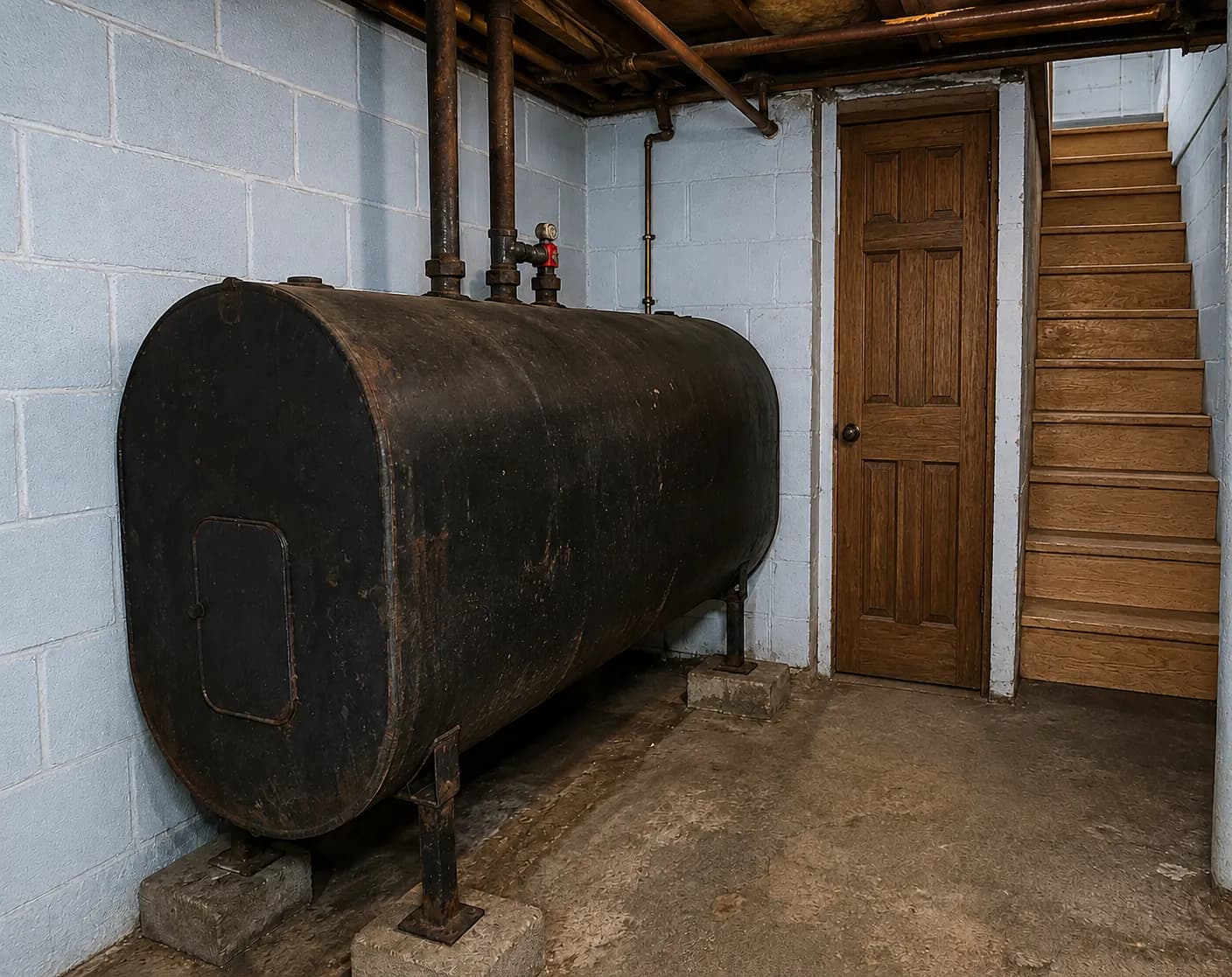
An unused heating-oil tank in a Bucks County basement is often a horizontal steel cylinder on short legs, with fill and vent piping and a supply line toward the burner. Age, odor or staining, or a remodel usually forces the decision. So can a heating change, or an inspector’s note during a sale.
Why indoor tanks are a different job
Stairs, finished rooms, remaining fuel, and copper or iron piping decide how an indoor tank comes out. If the tank cannot leave whole, cutting or handling it is contractor work, not a homeowner procedure. Remaining oil is part of that same conversation. Do not drain, cut, or haul the tank yourself. An exterior aboveground tank in a yard or garage is still an aboveground vessel, but access and weather exposure change the plan. Neither is an underground tank.
What affects a basement oil tank removal?
Is the tank still connected?
A tank that still supplies a furnace or boiler is part of the heating system. Taking it out means the house needs another heat source, or a new tank, before the old one can leave. A tank that has been sitting unused after a heating change is a different job: leftover oil may still be inside, but the burner may no longer depend on it.
How much oil is left?
Remaining fuel and residue affect how a tank is handled. Do not drain, open, or cut the tank yourself. When you call, say whether it looks full, partly used, or has been sitting empty. A contractor who later assesses the work will confirm the actual condition.
Can the tank come out in one piece?
Basement stairs, doorways, finished rooms, and tight turns decide whether a tank can leave whole. If it cannot, a contractor may need to dismantle it on site. That is contractor work, not a homeowner job, and it is one of the facts worth mentioning when you call.
What happens to fill and vent pipes?
Fill and vent lines often run from the tank to openings on the outside of the house. Those pipes, and the supply line toward the burner, belong in the same plan as the tank. The right method depends on the house. This page does not prescribe a single approach.
Does the municipality require a permit or inspection?
Rules vary among Bucks County boroughs and townships. Some offices publish tank-permit steps; others do not list them online. A missing webpage is not proof that no permit is needed. Start with permits and records for the municipality on the deed.
You don't need all the answers before calling.
Describe the tank’s location, whether it is still in use, and what prompted the inquiry. The referral service can receive that inquiry and, subject to availability, connect you with an independent contractor who can assess the work.
Call now(267) 873-4020Call Bucks County Oil Tank Removal.Pennsylvania DEP’s reimbursement FAQ says a leaking tank that stands on a basement floor is not eligible for the Underground Heating Oil Tank Cleanup Reimbursement Program. That program is about a qualifying buried release, explained on the cleanup reimbursement page. It is not payment for ordinary indoor removal.